
From Scripts to Systems: CS Fundamentals for Data
CS fundamentals for data scientists: 5 CS50 lessons on abstraction, precision, declarative SQL, and self-learning to build robust data systems.

CS fundamentals for data scientists: 5 CS50 lessons on abstraction, precision, declarative SQL, and self-learning to build robust data systems.

Learn essential web concepts in Flask—templates, routing, sessions, validation—so you can turn scripts into scalable, maintainable data apps.

How the web works for data scientists: TCP/IP, DNS, ports and HTTP codes to debug APIs, speed transfers, and scrape sites reliably.

Learn SQL’s core principles to replace fragile Python loops with faster, safer queries: robust ingestion, normalization, indexes, and injection-proof patterns.

How AI really works, explained via Harvard CS50x 2025: 5 practical lessons for data scientists on decision trees, LLMs, prompts, and RL.

Learn 5 CS50 Python lessons for data work: abstraction, iteration, dynamic typing pitfalls, clean syntax, and try/except for reliable pipelines.

Learn data structures for data scientists: arrays, linked lists, BSTs, and hash tables—trade-offs that make pipelines faster and more memory-efficient.

Learn how memory works for data scientists: strings, equality, views vs copies, heap vs stack, leaks, and buffer overflows from CS50.

Fix data science bugs with 5 CS50 low-level lessons: compilation, memory models, strings, real debugging, and exit codes for reliable pipelines.
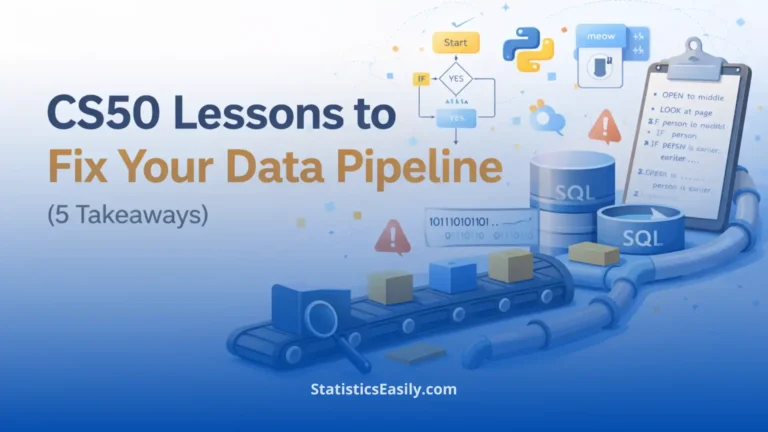
Learn 5 CS50x lessons to fix data pipelines: data context, binary logic, scalable algorithms, abstraction, and pseudocode for debuggable work.
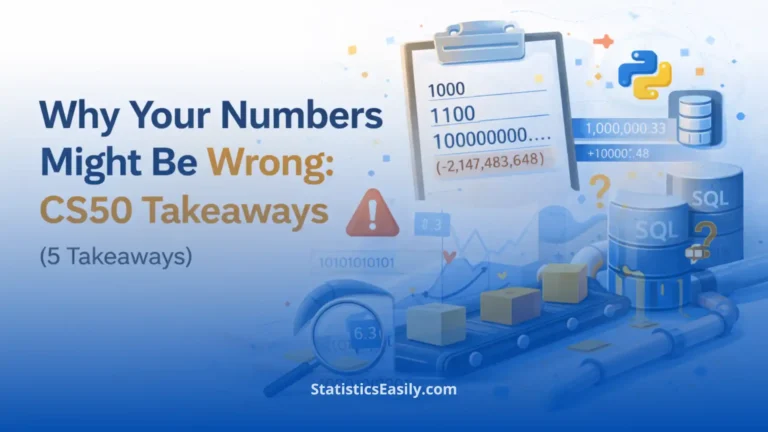
CS50 takeaways for data pros: why performance differs, why CLI matters, and how overflow and float imprecision can silently corrupt numbers in pipelines.

Learn 4 CS50x lessons to sharpen your data workflow: logic before syntax, under-the-hood thinking, tool choice, and algorithmic problem-solving.